OMAR-S-001 · Manuscript
Omar ibn Said’s autobiography
1831 · Library of Congress
The autobiography is a distinct Arabic manuscript, not a generic illustration of the life others described for Omar.
Omar ibn Said · Separate research project
Manuscripts, translations and the voices around them.
This project is not assigned an unconfirmed Book 3 title. Start with the autobiography, then distinguish the letter, covering correspondence, edited transcription and modern scholarship.
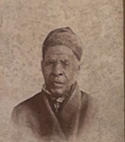 Omar ibn Said · Photograph by Tareq Naser
Portrait of Omar ibn Said. Photograph by Tareq Naser, 15 November 2025. Courtesy of New Hanover County Public Library, Owen and Barry Family Papers, OBC004.
Educated in West Africa before his capture and enslavement, Omar continued writing Arabic in North Carolina. His surviving writings include autobiographical passages, letters, scriptural quotations and devotional compositions. They should not be reduced to a single text or treated simply as illustrations of accounts written by his enslavers.
The 1831 autobiography at the Library of Congress has a different physical history from the Yale letter cataloged circa 1819. John Louis Taylor’s covering letter is another witness again. A statement about Omar’s wishes made by an intermediary must not be substituted for Omar’s own surviving words.
Mbaye Lo and Carl W. Ernst’s modern scholarship remains credited. The project’s provisional new translation is not published here as a replacement. The portrait object likewise needs separate descriptions for the historical image, its mount and Tareq Naser’s modern camera photograph.
The difficult geographical reading in the Yale letter, the drawing’s interpretation and discrepancies in its dates remain research questions, not opportunities for invented certainty.
Read the manuscript guide →OMAR-S-001 · Manuscript
1831 · Library of Congress
The autobiography is a distinct Arabic manuscript, not a generic illustration of the life others described for Omar.
OMAR-S-002 · Collection
Collection spanning several documents · Library of Congress
A manuscript reaches us through collecting, translation and correspondence as well as through its author’s hand.
OMAR-S-003 · Manuscript
Cataloged circa 1819 · Yale Beinecke Library
The Yale letter combines Arabic writing and a geometric drawing in a document distinct from the 1831 autobiography.
OMAR-S-004 · Transcription
Modern scholarly transcription · OpenITI
A manuscript-based edited transcription makes source readings accessible while preserving the need to inspect the handwriting.
OMAR-S-005 · Scholarship
2023 · University of North Carolina Press
Mbaye Lo and Carl W. Ernst provide a major modern scholarly reading of Omar’s surviving writings.
OMAR-S-006 · Image
Historical portrait; modern camera photograph · New Hanover County Public Library
The library identifies the sitter as Omar. The represented portrait, its mounted object and a modern photograph of that object must be described separately.
OMAR-S-007 · Edited edition
Earlier printed and digital mediation · UNC Documenting the American South
An earlier digital edition supplies a comparison point in the history of transcription and translation.
OMAR-S-008 · Research account
Documentary research discussed in 2019 · Library of Congress
The Library’s account of transcribing the collection shows how a biographical date can be revised through evidence.
No records match. Try another word or reset the filters.