Book 2 · Scholarly monograph in preparation
The Actuarial Empire
Mediterranean Captivity, Treaty Translation, and the Making of American Statecraft, 1609–1826
By Tareq Naser · Seventeen chapters connecting maritime institutions with the classification, valuation and delegation of coercion.
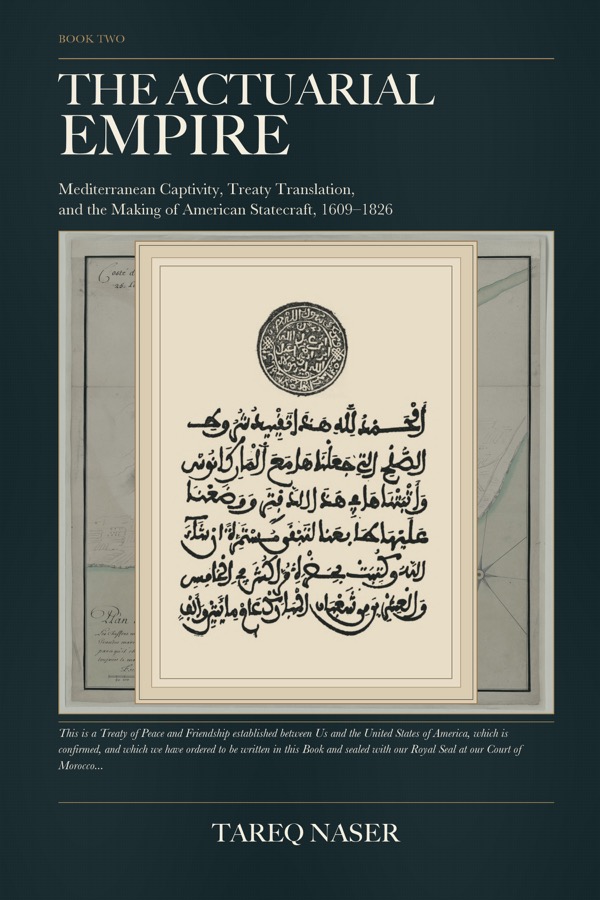 Book 2 · Cover design in preparation
Whose freedom, property and losses were protected?
The Actuarial Empire places Mediterranean diplomacy beside the domestic records of slavery. Treaties, naval appropriations, ransom negotiations, ship passports, mortgages, estate appraisals and purchaser notes made different kinds of claims enforceable. A promised payment was not a receipt; an appraisal was not cash collected; a certified translation was not necessarily equivalent to the manuscript it represented.
The book begins with Valencia’s 1609 expulsion, follows communities and maritime institutions around Salé, and turns to the United States after independence. Later chapters examine Jefferson’s mortgages, will and estate beside the writings and documentary treatment of Omar ibn Said. The histories remain distinct: Mediterranean ransom is not offered as the cause of valuation at Monticello, nor are unlike sums collapsed into a single total.
Actuarial is the author’s analytical term for the classification, valuation, delegation and translation of risk and coercion. The archive identifies the particular witnesses behind that interpretation.
The monograph remains in preparation. No press contract, publication date or cleared illustration program is claimed.
The seventeen-chapter route
Chapters 1–5
Maritime law, expulsion and captivity
Begin with the language that classified a vessel, a capture or a person. A commission, prize judgment and labor account each served different institutional purposes. Valencia and Salé provide historical settings rather than a single origin story for every later American practice.
Chapters 6–11
Recognition, release and translation
Follow the move from a proposed treaty framework to particular North African negotiations. Recognition, a captive’s release, a reported conversation and a translated agreement must remain separate events. The source trail tests what the American republic was told an instrument meant against the witnesses that survive.
- A Plan of Treaties: Protection after Imperial Separation
- The Moroccan Initiative and Institutional Non-Reciprocation
- The Betsey Capture
- The Archival Witness: Collation of the 1786 Moroccan-American Treaty
- The Abd al-Rahman Encounter and the Reported Religious Claim
- Translating Coercion: The Donaldson Instrument and the Ottoman Turkish Collation
Chapters 12–15
Federal power and domestic property
Treaties, naval appropriations, mortgages and estate records can all make claims enforceable without describing identical transactions. This part of the book compares the institutions that protected some people and valued or constrained others, while keeping promises, appraisals, sale accounts and actual receipts distinct.
- The Domestic Ledger: Captivity, Property, and Federal Choice
- Jefferson’s Naval Constitution and the Tripolitan Settlement, 1801–1807
- Decatur, the Algerian Treaties, and the Limits of a Victory, 1815–1816
- Monticello: Debt, Inheritance, and the Price of a Person
Follow the source trail
Chapters 16–17
Counter-archive and interpretation
Omar ibn Said’s writings are not an appendix to the voices of officials and enslavers. They require their own language, manuscript identity, translation history and interpretation. The concluding synthesis names actuarial statecraft as the author’s analytical framework, rather than a historical actor’s universal description.
Keep the transactions separate
A demand, a treaty obligation, a mortgage, a sale account and a receipt must each be read in their own legal and documentary setting. The journal’s accounts guide supplies a practical comparison sheet.
Read the accounts guide →